Top Digging Service Provider Services for Your Upcoming Building Project
Identifying the proper earth-moving professional is paramount for all building project. These skilled professionals serve a vital purpose in foundation preparation, assuring a stable base and suitable water drainage. Their proficiency in multiple soil varieties and security procedures can greatly determine successful outcomes. Still, learning how to identify the most appropriate professional goes significantly beyond just training. The intricacies of their work and contemporary approaches demand thorough exploration to attain the most favorable results.
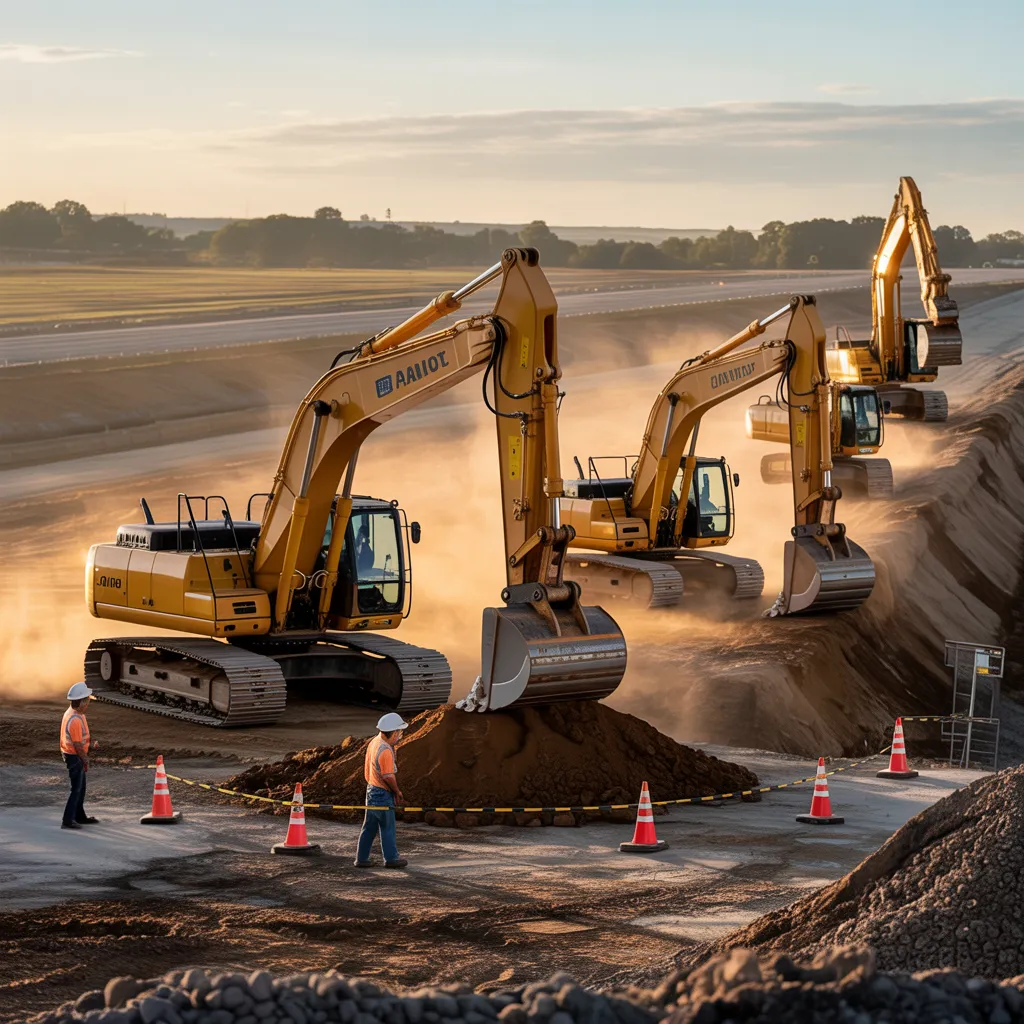
Grasping the Purpose of an Excavation Expert
An excavation contractor constitutes a vital component in the construction process, serving as the groundwork for any building project. They are responsible for preparing the site, which involves removing obstacles from the land, leveling the ground, and digging trenches for utilities and foundations. This contractor must possess comprehensive knowledge of ground composition, drainage conditions, and regulatory standards to ensure compliance and safety. Their expertise includes evaluating risks and implementing safeguarding strategies to reduce excavation hazards during excavation. Additionally, they coordinate with other construction professionals, ensuring that the excavation integrates smoothly with the overall project timeline. The excavation contractor also manages heavy machinery and labor forces, enhancing productivity while maintaining budget limits. By laying the groundwork for subsequent construction phases, they play an essential role in affecting the project's outcome, making their contributions invaluable to the entire construction process.
Key Services Provided by Excavation Contractors
Excavation contractors furnish a diverse range of critical offerings that are vital for the successful execution of construction projects. These offerings typically include site setup, where contractors eliminate the land of waste material, vegetation, and existing structures to create a suitable foundation. Grading is another significant offering, assuring the land is properly graded to support proper drainage and support for the structure.
Additionally, foundation specialists are responsible for digging trenches for important services, such as water, gas, and electricity, which are indispensable for building infrastructure. They also complete foundation excavation, removing soil and rock to create a stable base for new structures. Contractors may extend expert capabilities like demolition, where they securely deconstruct existing buildings, and ground treatment to boost ground conditions. These fundamental operations collectively assure the groundwork is duly handled, laying the foundation for a fruitful construction undertaking.
The Vital Role of Safety in Excavation Work
Construction endeavors inherently carry various risks, particularly in excavation work where heavy machinery and deep digging are prevalent. Safety remains essential in this sector to shield workers, local residents, and the integrity of the project. Excavation sites are full of hazards such as cave-ins, equipment mishaps, and exposure to underground utilities. As a result, following strict safety protocols is necessary.
Excavation contractors must focus on training and adherence to safety regulations, ensuring all personnel possess the necessary competencies and knowledge to identify and control risks. Regular safety audits and equipment inspections further enhance site safety. Additionally, utilizing proper signage and barriers can help prevent unauthorized access and accidents. Ultimately, a strong safety culture not only safeguards lives but also promotes project efficiency and reduces costs associated with accidents and delays. A commitment to safety reflects a contractor's professionalism and dedication to delivering successful outcomes in excavation work.
Contemporary Equipment in Excavation Procedures
As tech continues to progress, the excavation industry is experiencing major transformations that enhance efficiency and accuracy in operations. Modern machinery equipped with GPS and laser-guided systems allows for accurate grading and depth control, reducing the risk of human error. Drones are increasingly utilized for site surveys, providing real-time data and aerial imagery that streamline project planning and monitoring. Additionally, 3D modeling software enables contractors to visualize project layouts, optimizing the excavation process and minimizing waste.
Automation is transforming operations, with robotic excavators and modern diagnostic systems enhancing machine performance and maintenance scheduling. These technologies not only streamline workflows but also improve safety by tracking project site status and machinery capabilities. By integrating such contemporary solutions, construction specialists can deliver projects more efficiently, confirming punctual project delivery while preserving excellent quality of safety and quality. This advancement in technology demonstrates a significant shift in how excavation work is conducted today.
Determining the Perfect Excavation Contractor
How can one ensure the choice of a qualified excavation contractor? The procedure begins with thorough investigation. Potential customers should request referrals from industry professionals and examine online reviews. Evaluating a contractor's background in comparable work is essential, as it reflects their ability to manage particular location obstacles.
Next, checking licenses and insurance coverage ensures adherence with local requirements and shields against liabilities. A competent contractor should also submit a comprehensive body of previous work, showcasing their skill and quality standards.
Moreover, it is important to review the contractor's resources and systems, as modern tools can considerably augment efficiency and safety.
To summarize, direct communication is required; a contractor should be motivated to review project timelines, potential issues, and strategies. By using these approaches, clients can surely pick an excavation contractor who meets their project requirements and goals.
Cost Elements in Excavation Operations
Knowing the cost factors in excavation services is essential for effective project budgeting. Key details include the size of the project, which has a direct impact on the volume of material to be moved, as well as site accessibility, which may alter equipment requirements and labor efficiency. In addition, equipment and labor costs show considerable variation based on the specific demands of the excavation task at hand.
Project Dimensions Consequence
The scope of a construction project greatly determines the cost of excavation services, as larger sites often need more thorough planning and resources. Excavation volume expands with project size, resulting in higher labor, equipment, and material costs. Moreover, bigger projects may necessitate more state-of-the-art technology and specialized machinery, thereby escalating expenses. The challenge of the terrain also plays a crucial role; larger areas may exhibit varied geological conditions that require customized excavation methods. Additionally, large projects often involve longer timelines, causing increased overhead costs. All these considerations combined highlight the importance of accurately gauging project size to effectively budget for excavation services, ensuring that contractors can complete the needed work efficiently.
Site Accessibility Considerations
Site ease of access markedly affects the expense of digging operations, as it dictates the simplicity with which machinery and supplies can get to the project area. If a site is difficult to reach due to narrow pathways, sharp grades, or urban traffic, extra steps may be required. These may feature specialized vehicles, thorough preparation, or even street modifications, all of which can inflate overall expenses. Furthermore, restricted access can extend project timelines, resulting in increased workforce and equipment leasing expenses. Conversely, a site with straightforward entry can facilitate efficient operations, reducing expenses. Finally, understanding site accessibility is vital for precise financial planning and preparation, as it serves as a key role in establishing the overall viability and cost of excavation undertakings.
Equipment and Labor Costs
While site digging projects require careful planning and execution, machinery and workforce expenses emerge as key factors that can considerably influence total expenses. The type of machinery used, such as excavators, bulldozers, and backhoes, significantly assessment affects pricing. Equipment rental or purchase costs, along with upkeep and fuel expenses, can build up quickly. Additionally, the expertise and number of laborers required for the project play a pivotal role in determining labor costs. Skilled operators command higher wages, showing their specialized training. Furthermore, project length can extend costs, as longer timelines often require additional labor hours and equipment rental days. As such, a thorough understanding of these cost factors is essential for accurately budgeting excavation services in construction projects.
Case Examples: Accomplished Excavation Undertakings
Many excavation projects have showcased the critical role of skilled contractors in guaranteeing successful project results. One remarkable case included a business office structure in an urban area, where construction teams faced demanding ground circumstances. Through advanced methods, including soil stabilization and effective water drainage, the project was completed on time, limiting disruption to adjacent commercial operations.
A further example is a residential development where the contractor's proficiency in land preparation enabled effective water management. This not only increased the property's worth but also guaranteed adherence with local regulations.
Furthermore, a large-scale infrastructure project underscored the necessity of partnership between excavation groups and utility companies. By deploying innovative systems for below-ground surveying, the operators mitigated costly delays and guaranteed the security of existing utilities.
These scenarios establish that expert excavation teams are critical for overcoming complexities, hence contributing greatly to the overall favorable outcome of construction projects.
Regularly Asked Questions
What Credentials Should I Look for in an Excavation Company?
When appointing an excavation contractor, one should evaluate qualifications such as relevant licenses, insurance coverage, experience in similar projects, safety qualifications, quality of machinery, and dependable references to verify reliability and professionalism in their work.
What timeframe can you expect for a typical excavation project?
An excavation project typically requires anywhere from a few days to several weeks, based on factors like project size, site conditions, and complexity. Each project is distinct, affecting the overall timeline significantly.
What Types of Machinery Do Excavation Companies Utilize?
Excavation contractors regularly leverage bulldozers, backhoes, excavators, and dump trucks. These machines streamline various tasks, including digging, grading, and transporting materials, ensuring efficient project completion while adhering to safety standards and environmental regulations.
Excavation Work in Winter: Can It Be Performed?
Excavation operations can be conducted in winter, but it creates challenges such as hardened earth and unfavorable weather patterns. Contractors often leverage specialized equipment and approaches to address these obstacles and preserve efficiency during winter periods.
Which Permits Are Essential for Excavation Operations?
Excavation initiatives commonly demand authorizations such as land disturbance permits, excavation permits, and perhaps environmental permits. Local standards vary; thus, it's vital for contractors to reach out to local governing bodies to ensure compliance with all necessary requirements.